
Car import from the US
Car Select supports purchases and delivery from US lots and auctions. We discuss the selected lot, costs and paperwork before you buy.
from $500
service fee, car and logistics not included

Who it's for
- The model you want is cheaper at auction than locally
- You want a specific trim that isn't sold here
- You can wait for shipping to save money
What's included
- Access to every major auction and dealer, including undamaged cars
- Safe payments, official and flexible
- Insurance at every stage of transport
- Shipping with major international carriers
- A photo update at every stage: the purchase, the US warehouse, container loading, arrival in Poti
- Full landed cost worked out before you bid (lot, auction fees, freight, excise), with no hidden commissions
What do you get?
You get a checked car from the US at a good price, with a transparent history, full insurance and no auction risk.
How it goes
- 1
We agree the model, budget and condition and work out the full landed cost upfront
- 2
We shortlist lots on Copart, IAAI and Manheim and confirm with you
- 3
We bid and buy the lot, and you get photos from the auction yard
- 4
The car goes to our US warehouse and is prepped for shipping, with photos before loading
- 5
Ocean freight by container to Poti, usually 3–5 weeks in transit
- 6
Customs clearance, repairs if needed, handover: 6–10 weeks start to finish on average
See also
Related services
What is usually needed alongside this. Each page has the price and a request form.
Online, free
US-to-Georgia car shipping cost calculator 2026
What it costs to ship a car from a Copart or IAAI auction to Poti or Batumi: auction fee, US transport, ocean freight, insurance and port fees.
Online, free
Georgia car import cost calculator 2026
Excise of 1.5 or 4.5 GEL per cc, VAT and fees: work out what it costs to clear a car through Georgian customs under the rules in force since 2 April 2026.
from $10
Vehicle history check
Car Select orders a Carfax or AutoCheck report by VIN and walks you through it: accidents, owners, real mileage, service records, thefts and liens. Cars from Europe and Asia have their own databases.
Blog
Articles on this topic

October 10, 2026 · 5 min read
Which Cars Are Worth Importing from the US to Georgia in 2026
Since April 2, 2026, Georgia's car excise depends on age, and the six-year line is worth thousands of lari: with a 2.5-litre engine, a 2019 car pays three times the excise of a 2021 one.

July 16, 2026 · 8 min read
Cars from Japan and Korea in 2026: the case for and against right-hand drive
Japanese auctions give the most honest condition reports of any market in the world, and Korea offers cheap, recent, left-hand-drive crossovers. Here's what's actually worth importing from Asia into Georgia in 2026, and why the triple excise rate on right-hand drive decides almost everything.

July 5, 2026 · 5 min read
Bid deposits on US auctions: how much to put down and what happens if you walk away
Before bidding on a US auction you put down a guarantee deposit to show the bid is serious. If a lot is won and never paid for, the auction keeps a penalty equal to that deposit. Here's how the rules differ by platform.

June 18, 2026 · 7 min read
Buying from Copart and IAAI: how to pick a lot and not overpay
Copart and IAAI are the largest used and salvage car auctions in the US, and that's where most cars on the Georgian market actually come from. The gap between a good lot and a multi-thousand-dollar mistake comes down to how carefully the listing gets read.
May 28, 2026 · 9 min read
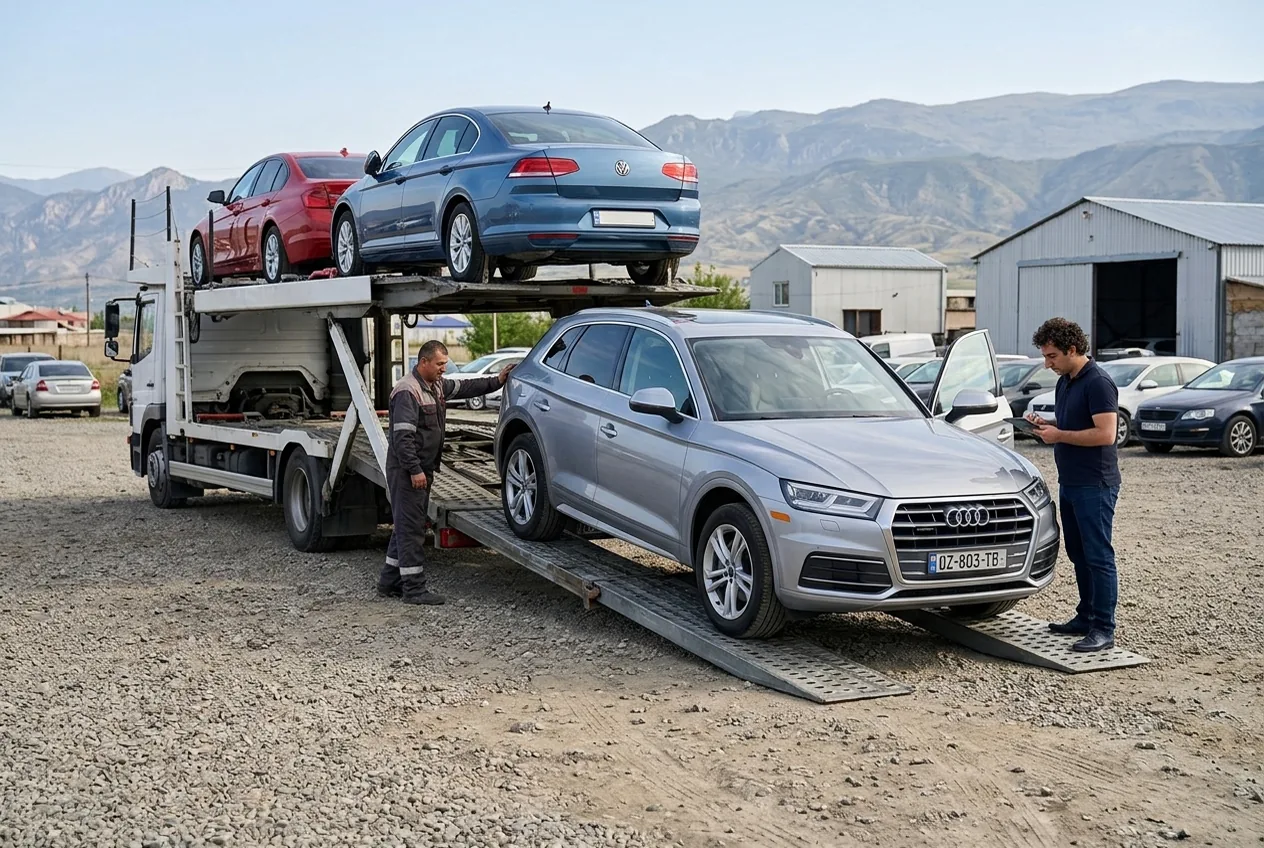
Importing from Germany: when it beats the US auctions
US auctions have long been Georgia's default route, but that doesn't make them always the right one. For several categories of car, Germany and its neighboring European markets win on timeline, on condition, and sometimes on landed cost too.
March 19, 2026 · 9 min read
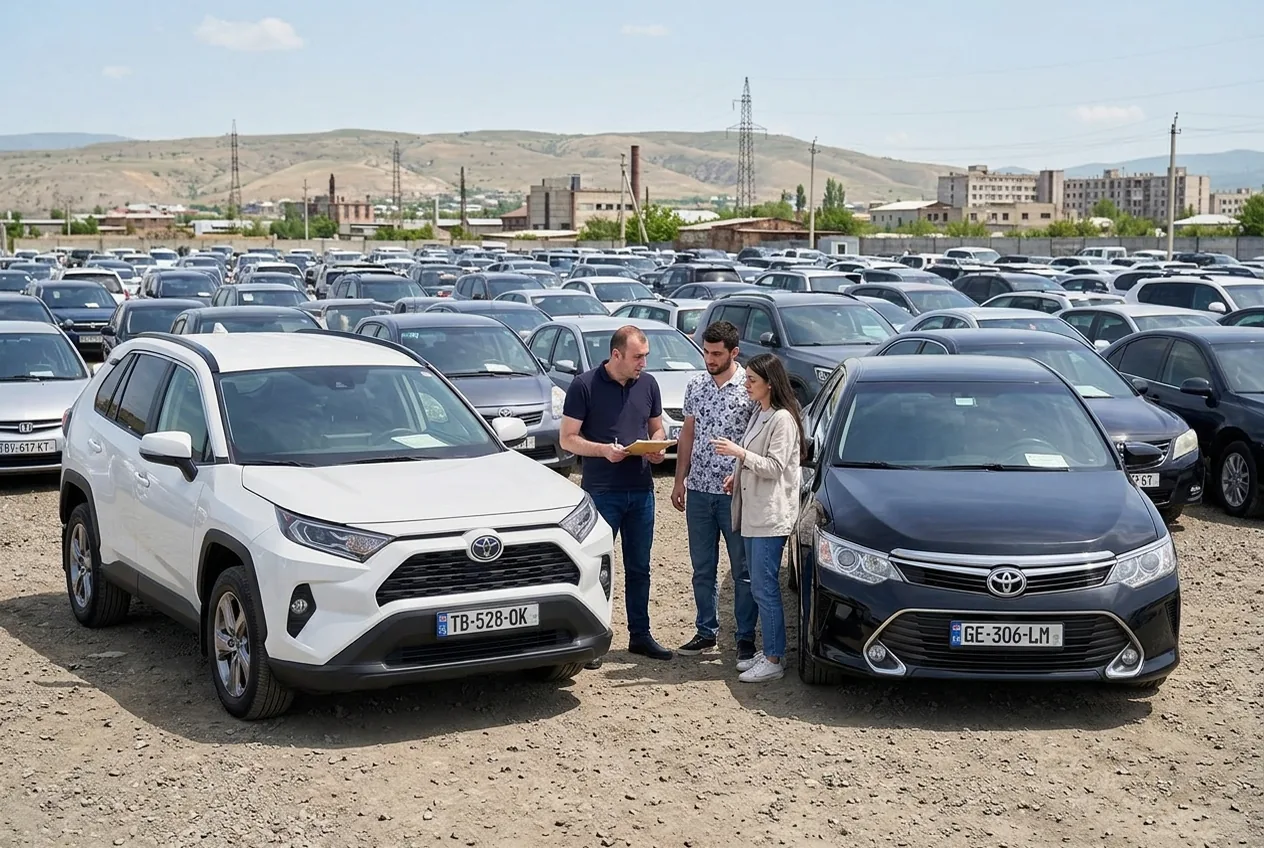
Toyota RAV4 and Camry prices in 2026: buy in Georgia or import from the US?
The RAV4 and the Camry are the two best-selling cars on the Georgian market, which makes them the clearest illustration of where importing from the US actually saves money, and where it just means spending the same money more slowly and with more risk.