
Author: Nodar, Car Select expert · February 10, 2026 · 7 min read
How to inspect a car before buying in Georgia: the full checklist
In short
The check has five steps: documents and VIN, history on Carfax or AutoCheck, a paint gauge on every body panel, computer diagnostics including the airbags, and a test drive in different modes. Factory paint reads 100–160 µm; after filler and a respray the gauge shows 250–400 µm.
Nine out of ten cars on the Georgian market carry hidden defects that don't show up in photos or in a five-minute look-over. Below is the order professionals actually check a car in.
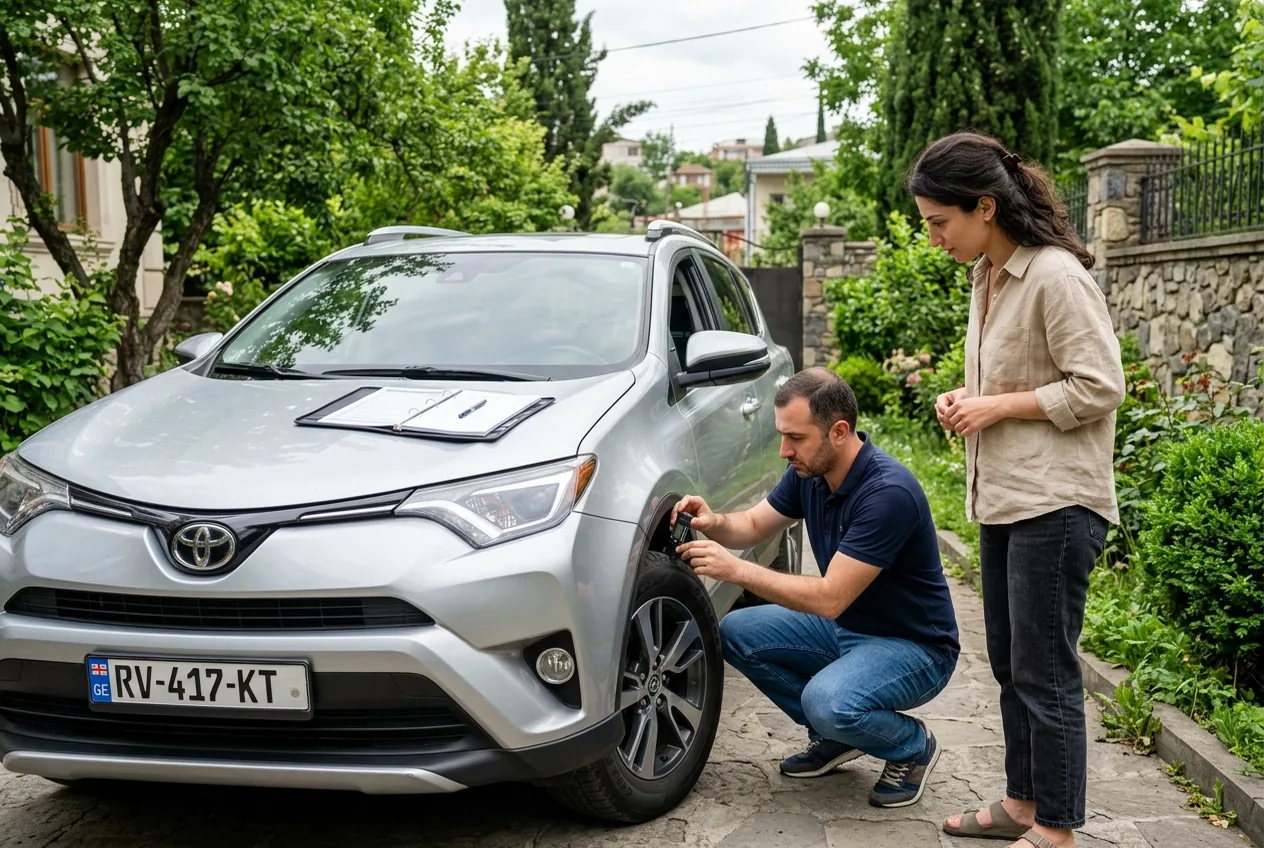
A listing with good photos and a clean-sounding history proves nothing: photos are taken after a wash and polish, and the "history" is whatever the seller chooses to tell you. The gap between a good car and a problem car only shows up in numbers: on a gauge, in a VIN report, and in the paperwork. Here's the order to check things in, from the cheapest step to the most expensive.
1. Documents and VIN, before you even go look at the car
Start by matching the VIN in the listing against the VIN in the documents, then run it through open databases for registration restrictions, liens, and total-loss accidents. This takes five minutes before you leave the house, and it filters out some cars before you ever waste time on a visit.
2. A Carfax or AutoCheck history report
If the car ever lived in the US (and on the Georgian market, most did), a Carfax or AutoCheck report shows insurance claims, odometer readings recorded on different dates, and ownership changes. A mileage reading that drops between two dated entries is the most reliable sign of a rolled-back odometer.
3. A paint-thickness gauge on every body panel
Factory paint holds a fairly steady thickness, usually in the 100–160 micron range. Filler and a respray push that number up to 250–400 microns on the affected panel. The gauge is run over every panel, and it immediately shows which ones are original and which were rebuilt after an impact.
4. Computer diagnostics and airbags
A scanner reads not just live fault codes but the ones stored in the modules' memory, the ones a seller might have cleared before a showing. Separately, check whether the airbags have ever deployed: that almost always means a serious accident, even if the body has since been repaired with no visible trace.
5. A test drive across different conditions
A gentle cruise around the block shows nothing. Push the car through acceleration and hard braking, turn the wheel lock to lock, listen to the transmission under load. Odd noises over bumps and through corners are things no paint gauge and no VIN report will ever catch.
- VIN and documents: free, fast, and done before you drive out
- A Carfax or AutoCheck report: essential for any car that's been in the US
- Paint gauge: every panel, not a sample of them
- Diagnostics: live and stored fault codes, airbag status
- Test drive: across conditions, not a straight cruise at idle
You can do every one of these yourself if you have the time, the equipment, and the experience to read the results correctly. In practice, a full on-site inspection takes an expert about an hour and costs less than a single defect will save you at the negotiating table.
Send a listing for inspection
Send the listing and your contact. We will arrange the inspection location and time. We reply during business hours.
$100 · per car
See also
Related services
What is usually needed alongside this. Each page has the price and a request form.
How the inspection works
What a car inspection covers: our protocol step by step
How the on-site inspection works: documents and VIN, Carfax history, paint depth gauge on every panel, OBD scan, suspension and test drive.
$100
On-site car inspection
Car Select runs independent diagnostics of the car you've picked, before you buy. Already found something interesting? We'll come to the seller before the deal and check it fully.
$250
Expert for a day
A Car Select specialist spends the whole day with you and checks as many cars as you can get through. Useful when you have several cars on your list.
Blog
How to buy a car with your eyes open
July 14, 2026 · 8 min read
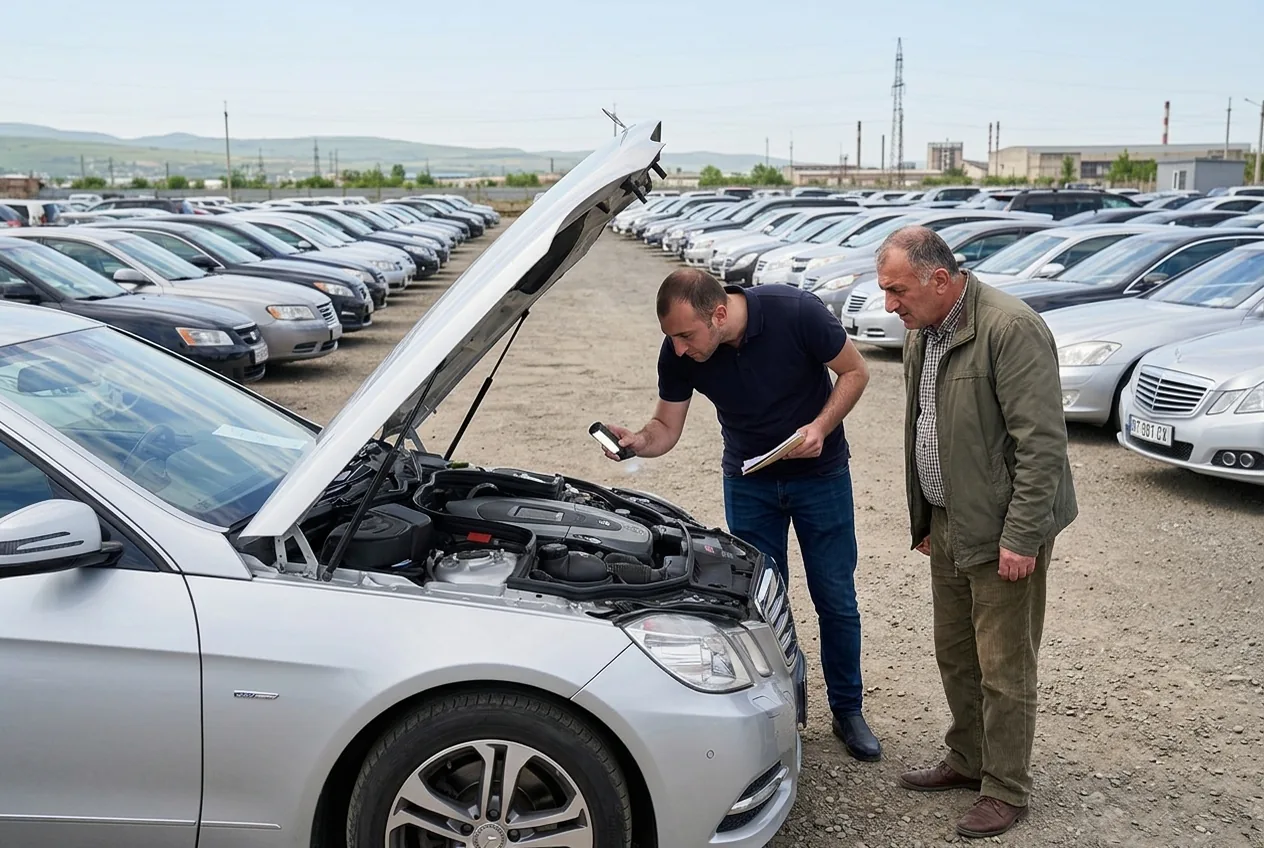
Five ways a serious accident gets hidden at the Rustavi car market
Rustavi is the largest used car market in the region, and the standard of pre-sale prep there is high enough that a seriously damaged car becomes visually flawless in a week. Here are the five most common techniques, and how to test for each one.

April 23, 2026 · 8 min read
Expat guide: buying and registering a car in Georgia in one day
In Georgia a foreigner can buy a car and register it in their own name with no residence permit, no local address and no middleman, and the whole thing fits into one working day. Here's the order of operations, the paperwork, and the usual places where one day turns into a week.
October 10, 2026 · 5 min read
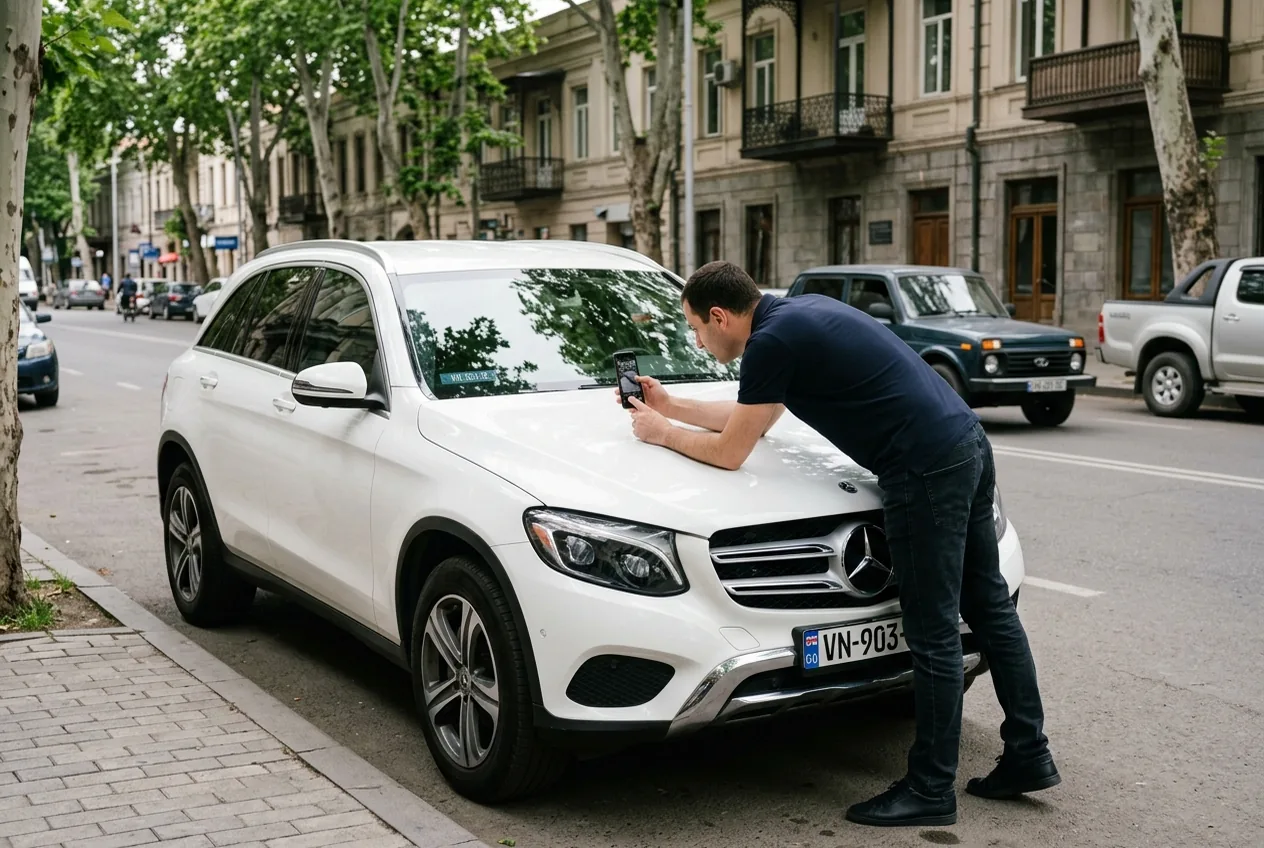
How to Check a Car by VIN in Georgia: Liens, Accidents and Mileage
A VIN check is the cheapest filter before buying a car in Georgia: it shows accidents, mileage records and auction history. Match the number in three places, order the report for the car's country of origin, and get liens checked when the car is re-registered at an MIA Service Agency center.