
Author: Nodar, Car Select expert · July 14, 2026 · 8 min read
Five ways a serious accident gets hidden at the Rustavi car market
In short
Five tricks come up most often: a local respray blended into the neighbouring panels, damaged parts swapped for used ones, tampering with the airbags, clearing fault codes before a viewing, and straightening the frame without restoring the structural members. A Carfax or AutoCheck report, a paint gauge, an underbody check on a lift and computer diagnostics together catch all five. A full inspection in Rustavi takes about an hour.
Rustavi is the largest used car market in the region, and the standard of pre-sale prep there is high enough that a seriously damaged car becomes visually flawless in a week. Here are the five most common techniques, and how to test for each one.
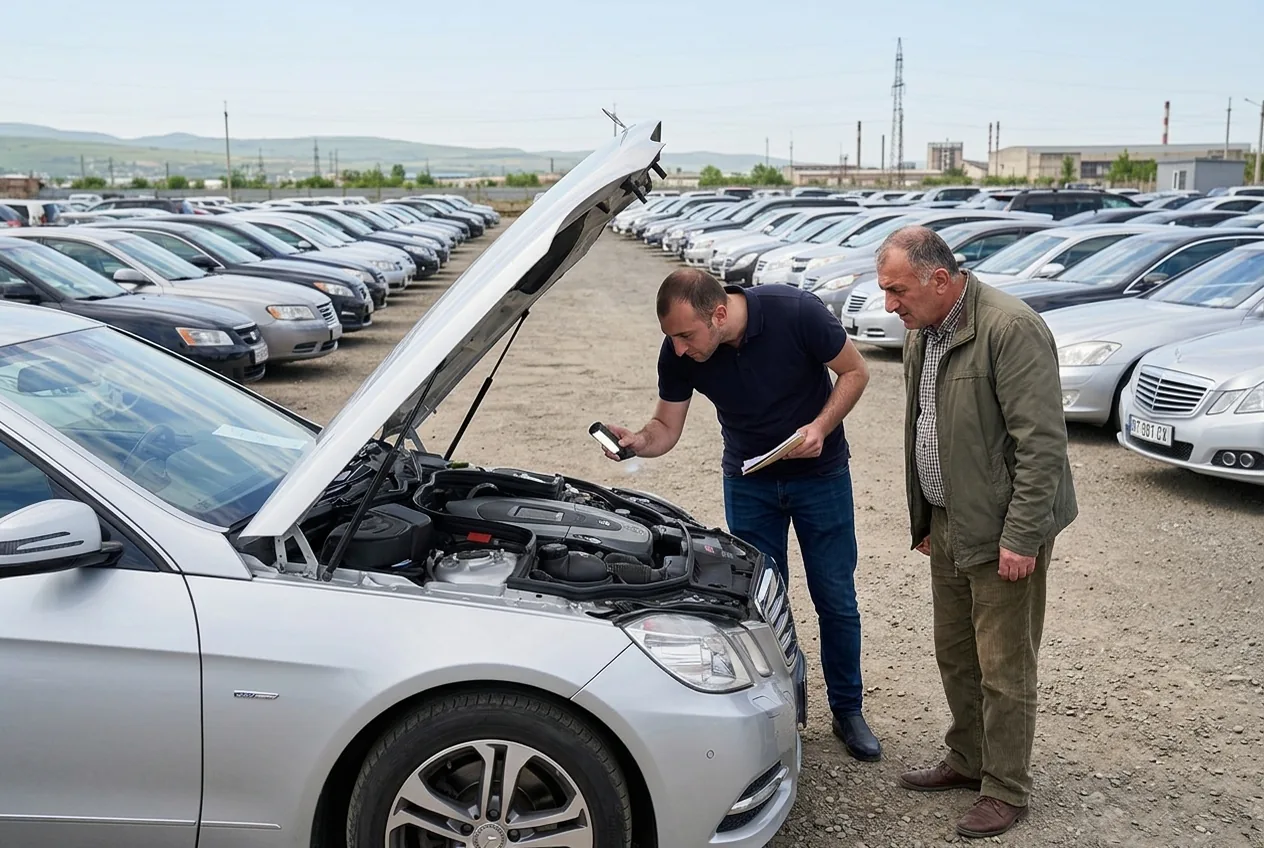
This isn't fraud in the legal sense. Pre-sale prep is normal practice, and nobody is obliged to tell a buyer everything. The problem starts where cosmetics hide damage to structural components: a car like that handles the next impact worse, and its real value is thousands of dollars below the asking price. Below are five techniques, ordered by how often you'll run into them, and a specific check for each.
1. Local respray blended into the neighboring panels
The most common approach. The damaged panel gets filler and paint, and to avoid a color mismatch the paint is blended out onto the adjacent panels. In daylight, after polishing, the transition is invisible. The paint gauge sees it: 250–400 microns on the repaired panel instead of the factory 100–160, and an intermediate 180–220 on the neighbors, which is what gives the blend away.
The check: measure every panel, including the roof and the inner surfaces of the door apertures, not three spots picked by eye. And always look at the body under raking light at a shallow angle: fresh clear coat behaves differently from factory.
2. Swapping damaged parts for used ones
Instead of repairing it, a fender, door or hood is simply replaced with a used part in the same color from a breaker's yard. The paint gauge reads normal here: the part is factory, just off a different car. You find it by other signs: uneven panel gaps, rounded-off edges on the mounting bolts, missing or mismatched factory markings and stickers, fresh sealant on the seams instead of the factory bead.
- Panel gaps: measured on both sides and compared against each other, not eyeballed
- Hinge and mounting bolts: is the factory paint on the head intact, or chewed by a wrench
- Glass: the maker's marking and year should match across every window on the car
- VIN stickers on panels and factory plates: present, legible and not re-applied
- Seam sealant: an even factory bead versus sloppy hand application
3. Airbag work
The most dangerous of the five. After deployment, an airbag is either replaced with a used unit, or a dummy is fitted, or the empty housing is left in place with the fault suppressed by a resistor emulator. The dashboard warning light stays off, and the buyer finds out only in the next accident, when the bag doesn't fire.
There's one reliable check: diagnostics with a crash data read from the SRS module. Deployment is written to memory and can't be fully erased with standard tools. On top of that, look at the condition of the dashboard and the steering wheel: signs of disassembly, plastic textures that don't match, a new cover on an old wheel.
4. Clearing fault codes before the viewing
Half an hour before the buyer arrives, a scanner clears every code. The car starts, the dash is clean, a lap around the block goes perfectly. Two hundred kilometers later the codes come back. The antidote: read stored codes as well as active ones, check the ignition cycle counter since the last reset, and check the onboard readiness monitors. If all of them read "not ready," the memory was wiped minutes ago.
5. Straightening the geometry without restoring the structure
After a heavy impact the body gets pulled on a jig, but the frame rails, strut towers and reinforcements are already deformed and weakened. From the outside the car looks straight and the doors close. You have to look underneath and under the hood: waves and creases in the rails, evidence of straightening and welding, factory spot-weld points that don't line up, fresh undercoating on one localized area, engine bay gaps that differ left to right.
An indirect sign that often surfaces only after purchase: uneven tire wear and a pull to one side that a normal alignment won't fix. If the body geometry is off, the wheel angles can't be brought into spec at all.
An inspection order that covers all five
- A Carfax or AutoCheck report ordered yourself on the day of the inspection, which filters out some cars up front
- Paint gauge over every body panel, including the roof and apertures
- Underbody inspection on a lift or ramp: rails, sills, strut towers, weld marks
- Diagnostics: active and stored codes, SRS crash data, readiness monitors
- Panel gaps, glass markings and the mounting bolts on every bolt-on part
No single step substitutes for the others: a used replacement panel is invisible to the gauge, a cash repair is invisible in the report, and a bent frame rail is invisible from above. A full on-site inspection in Rustavi takes an expert about an hour. The price gap between a car with an honest history and one rebuilt after a serious crash is typically $1,500 to $5,000.
Send a listing for inspection
Send the listing and your contact. We will arrange the inspection location and time. We reply during business hours.
$100 · per car
See also
Related services
What is usually needed alongside this. Each page has the price and a request form.
How the inspection works
What a car inspection covers: our protocol step by step
How the on-site inspection works: documents and VIN, Carfax history, paint depth gauge on every panel, OBD scan, suspension and test drive.
$250
Expert for a day
A Car Select specialist spends the whole day with you and checks as many cars as you can get through. Useful when you have several cars on your list.
$100
On-site car inspection
Car Select runs independent diagnostics of the car you've picked, before you buy. Already found something interesting? We'll come to the seller before the deal and check it fully.
Blog
How to buy a car with your eyes open
February 10, 2026 · 7 min read
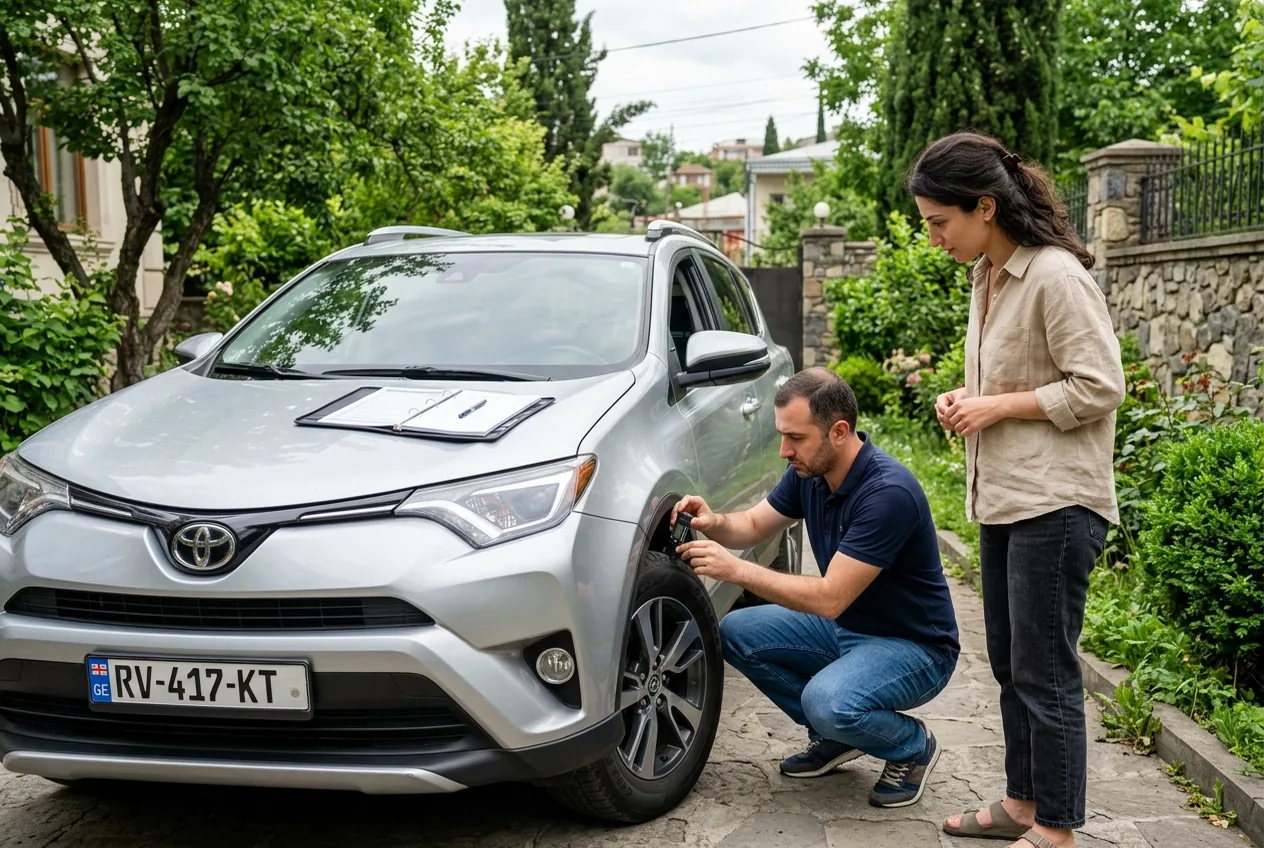
How to inspect a car before buying in Georgia: the full checklist
Nine out of ten cars on the Georgian market carry hidden defects that don't show up in photos or in a five-minute look-over. Below is the order professionals actually check a car in.
October 10, 2026 · 6 min read
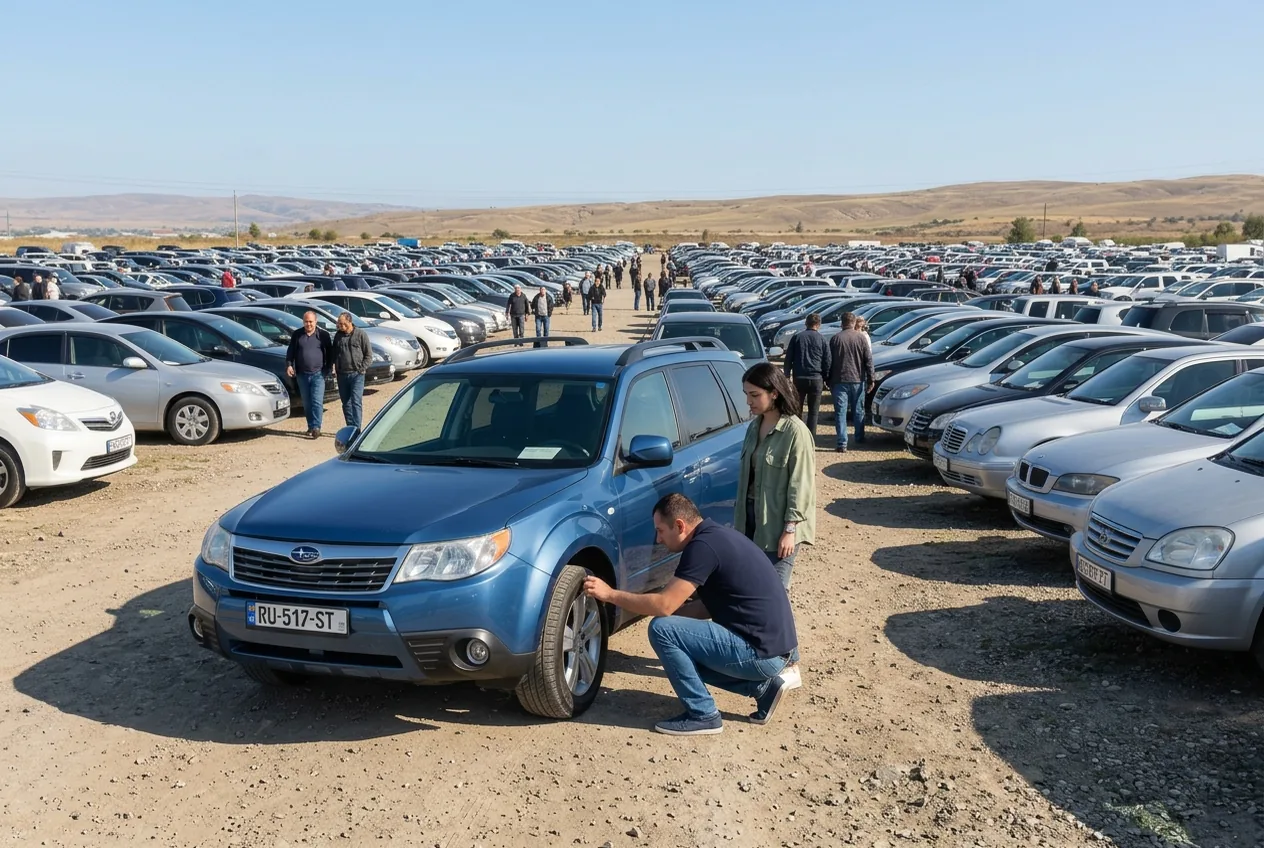
Rustavi Car Market: How to Buy a Car Without Overpaying
Rustavi is Georgia's largest car market, and the main trading days are Saturday and Sunday. Most sellers are dealers and popular cars under $15,000 sell within one to two weeks, so plan the checks before you go.
October 10, 2026 · 5 min read
Is It Worth Buying a Used Car in Georgia in 2026?
In 2026 the median asking price in Georgia sits around $13,500 to $14,000, exports to neighbouring countries have shrunk, and there are more cars on the local market. That helps buyers in Georgia, while export to Russia got more expensive.