
Author: Nodar, Car Select expert · May 27, 2026 · 7 min read
Why Carfax can lie: reporting lag and how to check by hand
In short
Carfax is a commercial database, not an accident register: it holds only what was reported, and records arrive late. A cash repair never shows up in the report, but a paint gauge reads about 280 µm on that panel instead of the factory 130. That is why the report is paired with an inspection.
Carfax is a useful tool, but it isn't a government accident registry. It's a commercial database that records what it gets told. Between a real crash and a line in the report sits a chain of several links, and any one of them can break.

"Clean Carfax" works as a quality stamp in listings, and sellers know it. But the report doesn't answer the question "was this car in an accident?" It answers a different one: did any event tied to this VIN reach a database Carfax works with, and did it get there before you clicked the button?
Where Carfax gets its data
The sources are insurance companies, state DMVs, service centers, auctions, tow operators, police reports and inspection stations. None of them is obliged to report everything, and none is obliged to do it quickly. Carfax aggregates what it's given, so a gap in the sources becomes a gap in the report.
What systematically never makes it into the report
- Cash repairs with no insurance claim: no event is created in any database at all
- Work done in a private garage or a shop that isn't plugged into any reporting system
- Accidents with no police call and no paperwork: the standard outcome for minor and mid-sized impacts
- Damage sustained after the last entry in the report, including during transport and storage on a lot
- Events in jurisdictions with limited data sharing: not every state and not every country reports equally fully
The lag between event and entry
Even when an event does reach the database, it doesn't arrive instantly. Insurers take weeks to close a claim, DMVs upload data in batches, auctions update lot status once the paperwork clears. Real-world lag runs from a few days to a few months. That creates a dangerous window: the car has already been wrecked and repaired while its report is still spotless. That window is exactly when most of them get sold.
A separate scenario: the report the seller bought in advance. You're shown a PDF dated three months ago, and anything could have happened since. As a rule, a report you didn't order yourself today means nothing, legally or practically.
How to check by hand, and what to add
First move: order the report yourself, and order it from both systems. Carfax and AutoCheck work with partially different source pools, and an event missing from one turns up in the other regularly. The price difference between two reports is nothing next to the price of a missed accident.
Second: cross-check the mileage readings across dates inside the report itself. A descending sequence of odometer entries proves a rollback outright, and you don't need an expert to see it. Third: watch for long gaps in the history. A year or eighteen months with no entries at all, sandwiched between periods of active use, often means the car was sitting in a shop or being serviced off the books.
- Order the report yourself on the day of the inspection, and never accept a printout from the seller
- Cross-check Carfax against AutoCheck: their source pools don't overlap completely
- Verify the odometer sequence by date within the report
- Find every service gap longer than a year and get each one explained
- Match the number and geography of owners against the car's condition: three states in two years is worth a second look
What a paint gauge sees that a database can't
No report replaces a physical inspection, for one reason: a database records the event, an instrument records the consequence. A cash repair creates no entry anywhere, but it leaves 280 microns on a body panel instead of the factory 130. Fault codes stored in module memory, weld marks on the frame rails, mismatched factory markings on the glass, color shift under raking light: all of that exists whether or not an insurance company ever found out about it.
The working sequence is this: a VIN report filters out cars with documented problems before you drive anywhere, and it's cheap. The physical inspection catches everything else. A clean Carfax is a reason to go and inspect the car, not a reason to skip it.
In practice, roughly one in five cars with a perfectly clean report that we've checked on lots in Tbilisi and Rustavi showed bodywork on the paint gauge. Carfax is still useful: it covers one layer of risk out of three.
Send a listing for inspection
Send the listing and your contact. We will arrange the inspection location and time. We reply during business hours.
$100 · per car
See also
Related services
What is usually needed alongside this. Each page has the price and a request form.
How the inspection works
What a car inspection covers: our protocol step by step
How the on-site inspection works: documents and VIN, Carfax history, paint depth gauge on every panel, OBD scan, suspension and test drive.
from $10
Vehicle history check
Car Select orders a Carfax or AutoCheck report by VIN and walks you through it: accidents, owners, real mileage, service records, thefts and liens. Cars from Europe and Asia have their own databases.
$100
On-site car inspection
Car Select runs independent diagnostics of the car you've picked, before you buy. Already found something interesting? We'll come to the seller before the deal and check it fully.
Blog
How to buy a car with your eyes open
October 10, 2026 · 5 min read
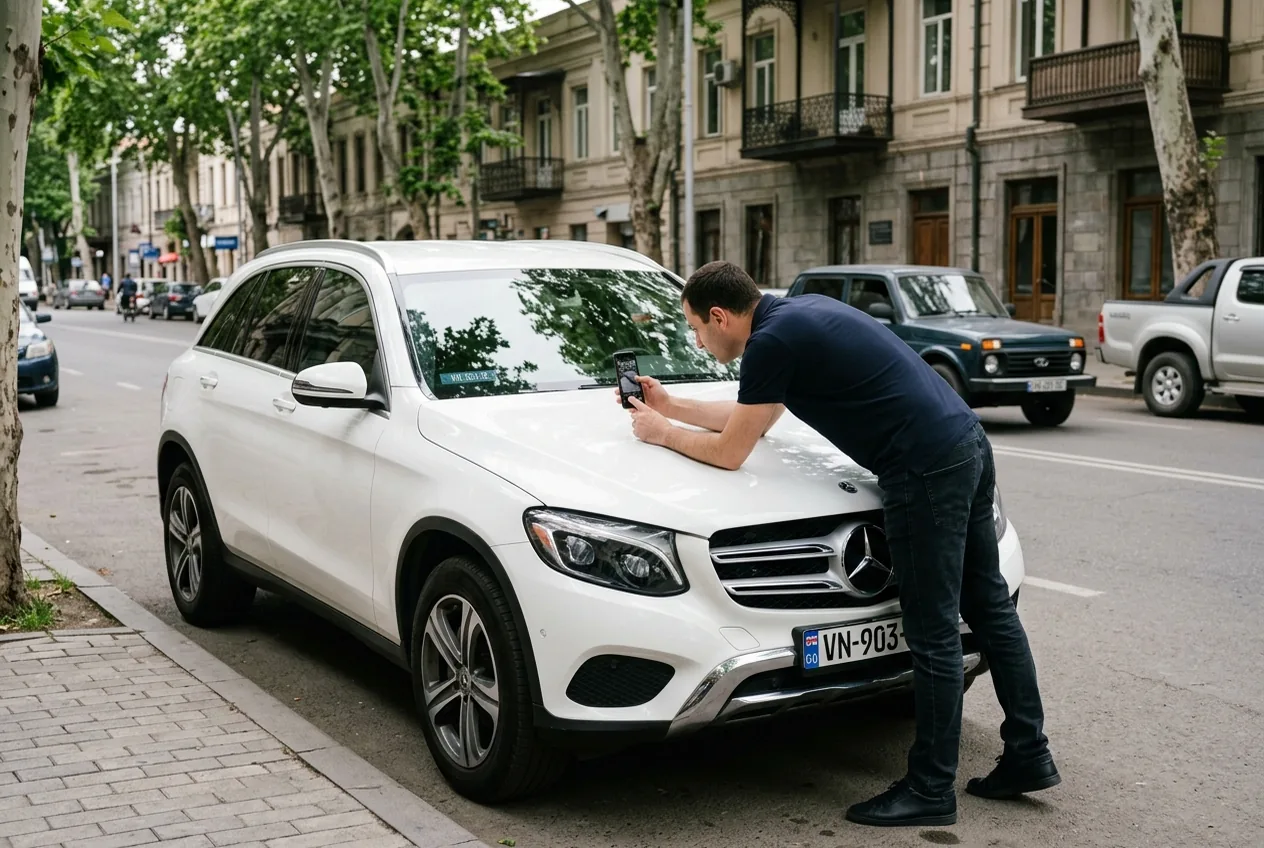
How to Check a Car by VIN in Georgia: Liens, Accidents and Mileage
A VIN check is the cheapest filter before buying a car in Georgia: it shows accidents, mileage records and auction history. Match the number in three places, order the report for the car's country of origin, and get liens checked when the car is re-registered at an MIA Service Agency center.
July 14, 2026 · 8 min read
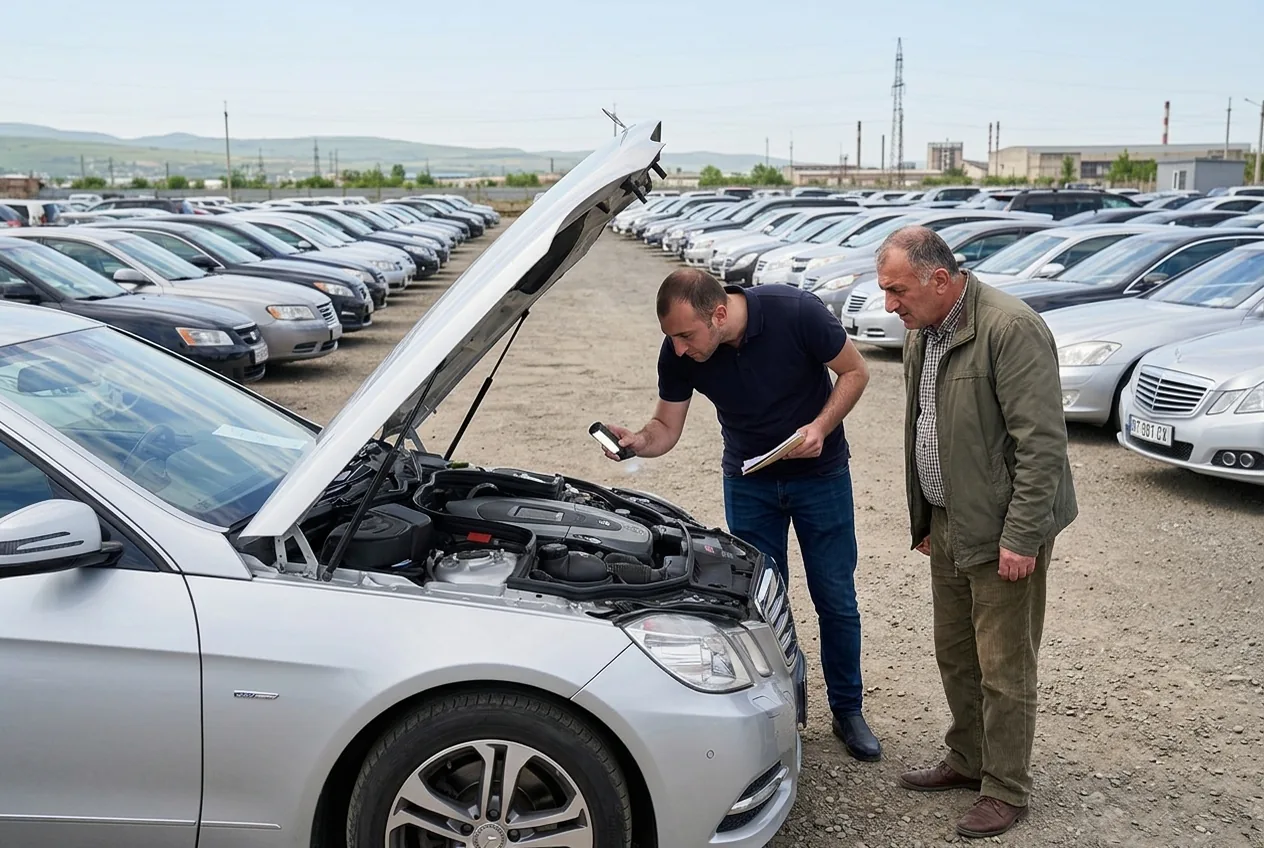
Five ways a serious accident gets hidden at the Rustavi car market
Rustavi is the largest used car market in the region, and the standard of pre-sale prep there is high enough that a seriously damaged car becomes visually flawless in a week. Here are the five most common techniques, and how to test for each one.
October 10, 2026 · 5 min read
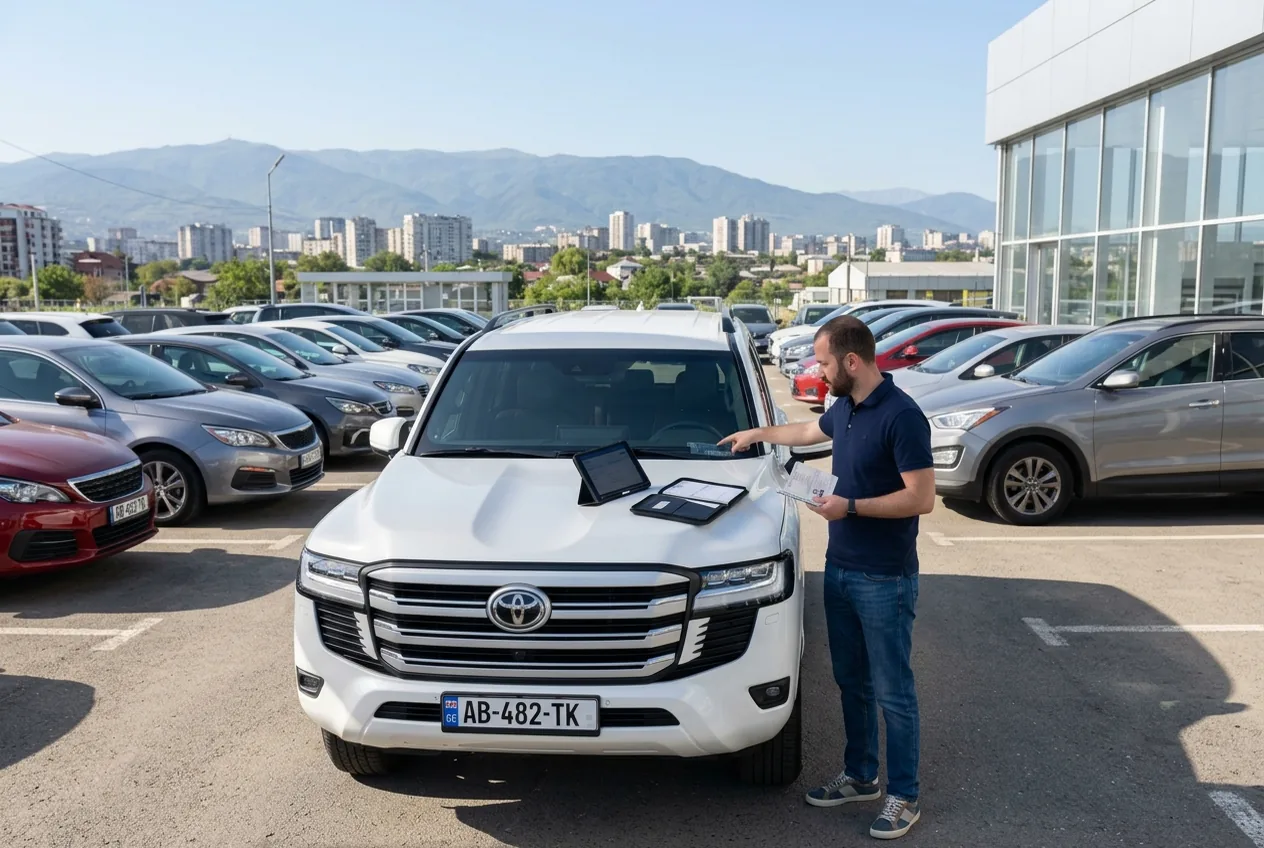
Re-registering and registering a car in Georgia: documents, fees and deadlines
The MIA Service Agency registers cars and transfers them to new owners for the same 200 GEL. What to bring in each case, how long you have to register an imported car, and how to check for liens and seizures before you pay.